
|
When FLEET Space had a last-minute opportunity to launch 3U worth of CubeSats on a Rocket Lab Electron launch vehicle, with the caveat that the CubeSats had to be ready in two weeks (!), they came to Pumpkin. We not only typically have nanosatellite-class equipment in stock, but we also have a proven track record of working quickly on projects that require outside-of-the-box thinking.
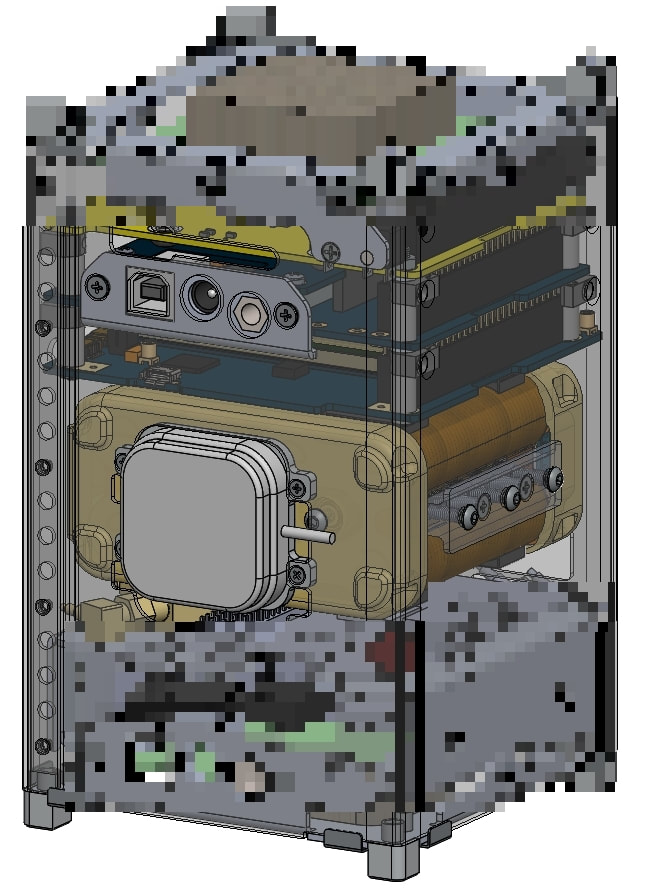
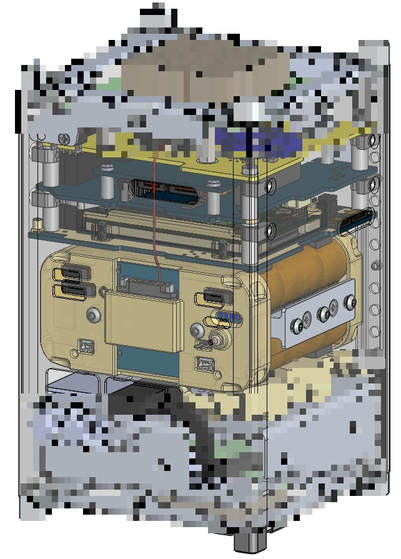
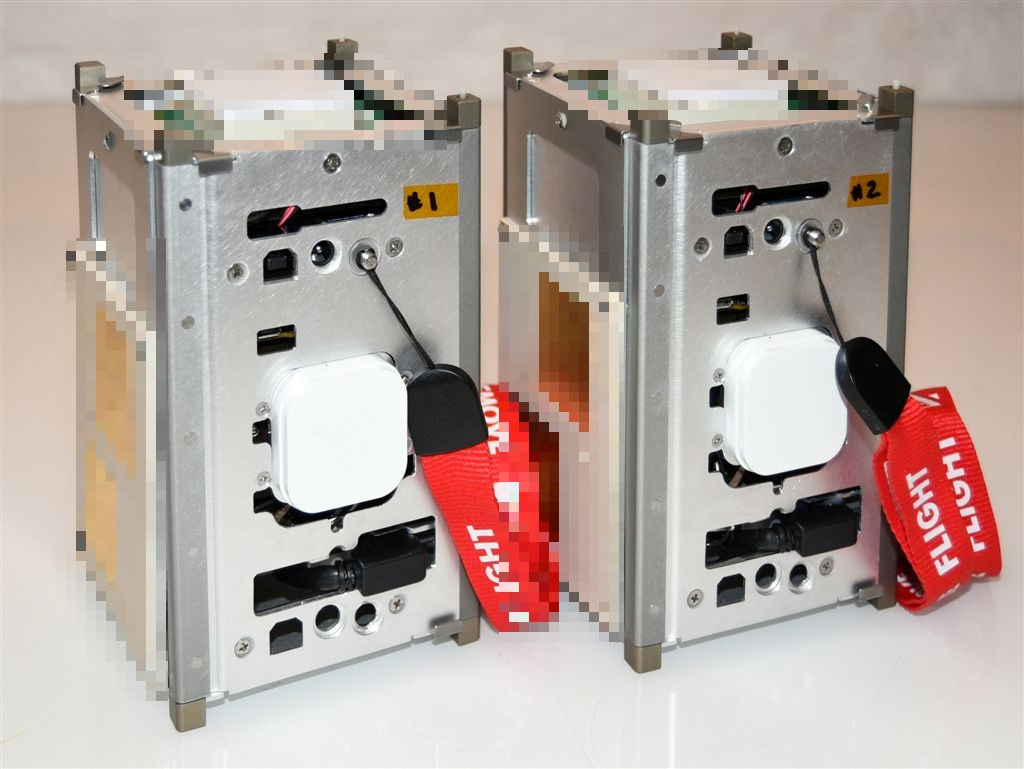
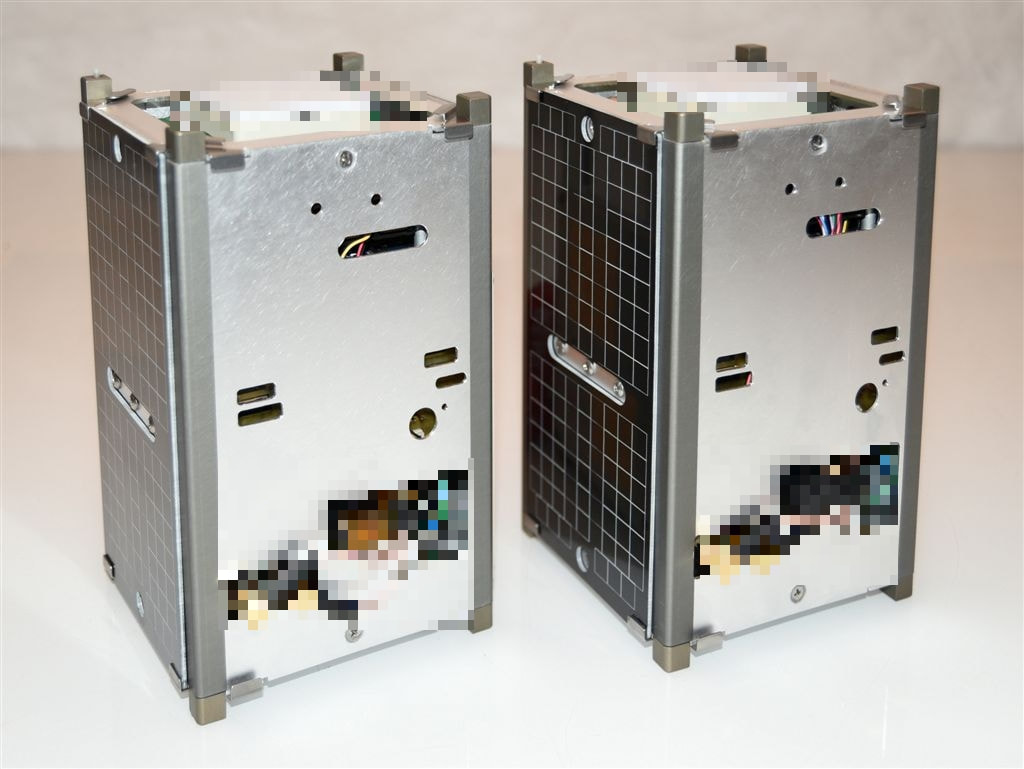
Within two weeks, we needed to come up with a working architecture, source the required components / assemblies, make any modifications required, integrate the FLEET payload and antennas (the pixelated portion above), and provide a software framework upon which FLEET could write their mission software. Given the very short notice and the desire to maximize the utility of the 3U of volume available on this ride, Pumpkin and FLEET settled on a dual-1.5U mission, with two hardware-identical 1.5U CubeSats. We decided to go with a battery-power-only architecture, as that reduced costs and complexity, and fits within the 1.5U available. Pumpkin immediately embarked on creating a new operating mode for our BM 2 battery; within a few days we had this up and running, and Proxima I/II were thus enabled. The two satellite were built with US and Australian teams working together and remotely, then environmentally tested with no issues, and finally delivered to Rocket Lab for LV integration. Proxima's Pumpkin components included:
The Pumpkin bus components occupy around half the volume and mass of each Proxima CubeSat; FLEET's payload(s) occupy the rest. The GPSRM along with its power-efficient orbit propagator enable Proxima's mission ops, and the low-power 16-bit PPM E3 PIC24 MCU running Salvo along with the BM 2 and its sleep mode guarantee an efficient use of the battery's available energy. Additionally, some of the code from Stanford University's QB50 project was donated to the Proxima mission, and lives on in Proxima I/II. More information on these CubeSats can be found here.
Comments are closed.
|
Archives
March 2024
Categories |
 RSS Feed
Home |
About Us |
Store |
Salvo RTOS |
Contact
|
Copyright © 2015-2022